
The Fed Hike That Could Save the Rally
Thoughts on the Market

We have a Fed meeting in two days, where Kevin Warsh is widely expected to keep rates unchanged.
That hasn’t stopped the market from doing the Fed’s job for them.
Maybe that was the plan all along. Who knows?
What we do know is that we were wrong in calling for peak hawkishness at the end of June. The recent re-escalation in the Iran conflict has sent oil prices nearly 30% higher in just two weeks, pushing rate hike expectations right back to fresh highs.
Despite all of that, the market has held up pretty well. And that’s not entirely surprising. Markets usually don’t price in the same story twice to the same extent. But with oil now driving the latest move higher in rate expectations, interest rates themselves could soon become the pin that pops this rally — especially in a thin summer market where liquidity is drying up by the day.
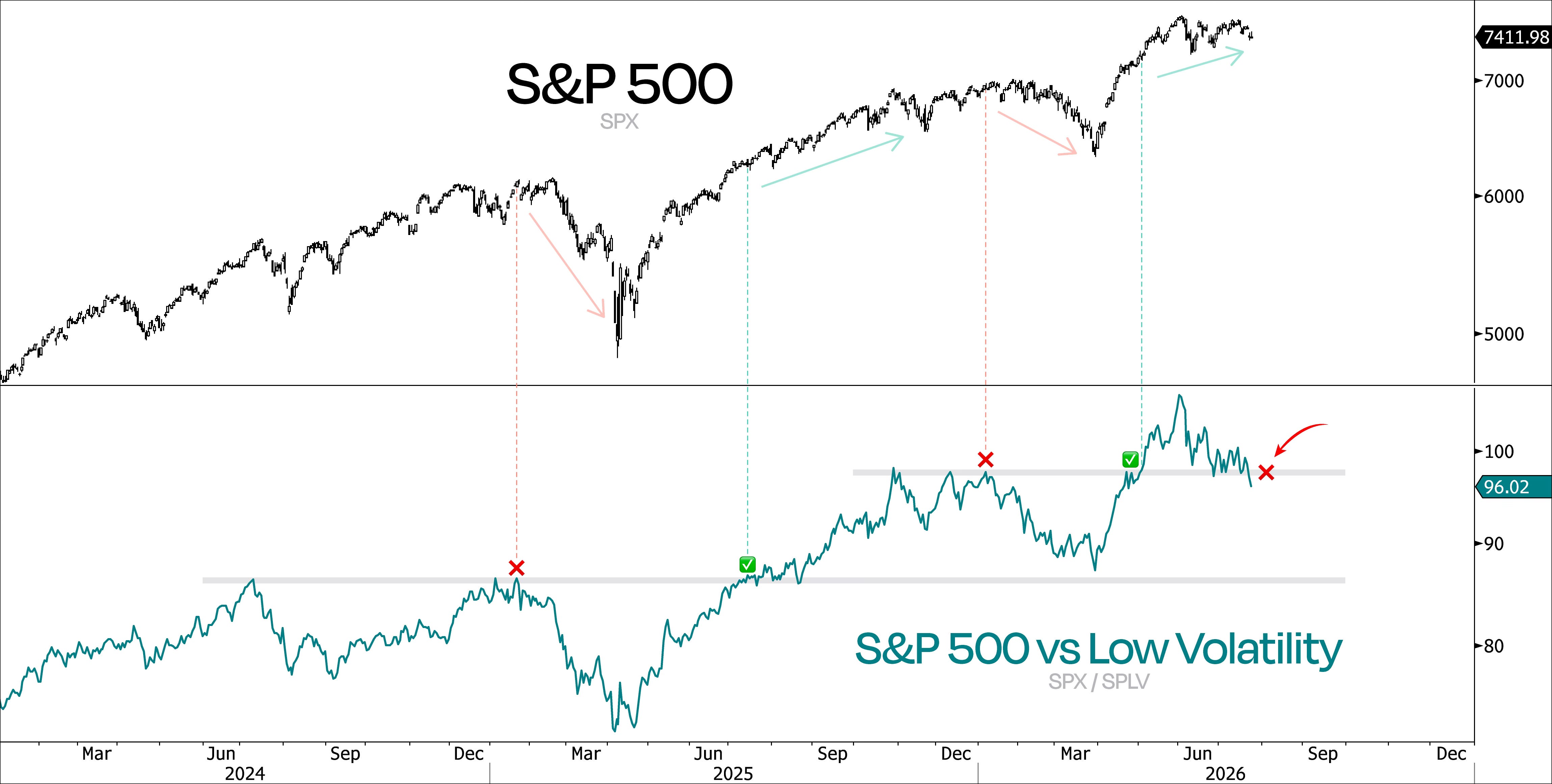
That brings us to our first chart, which clearly shows the damage building underneath the surface. Below, we look at the S&P 500 vs low-volatility stocks — a chart we’ve shown quite a bit over the past few weeks. As you can see, after spending weeks consolidating above a key support level throughout this hawkish repricing, it finally broke down, pointing to a more defensive market.
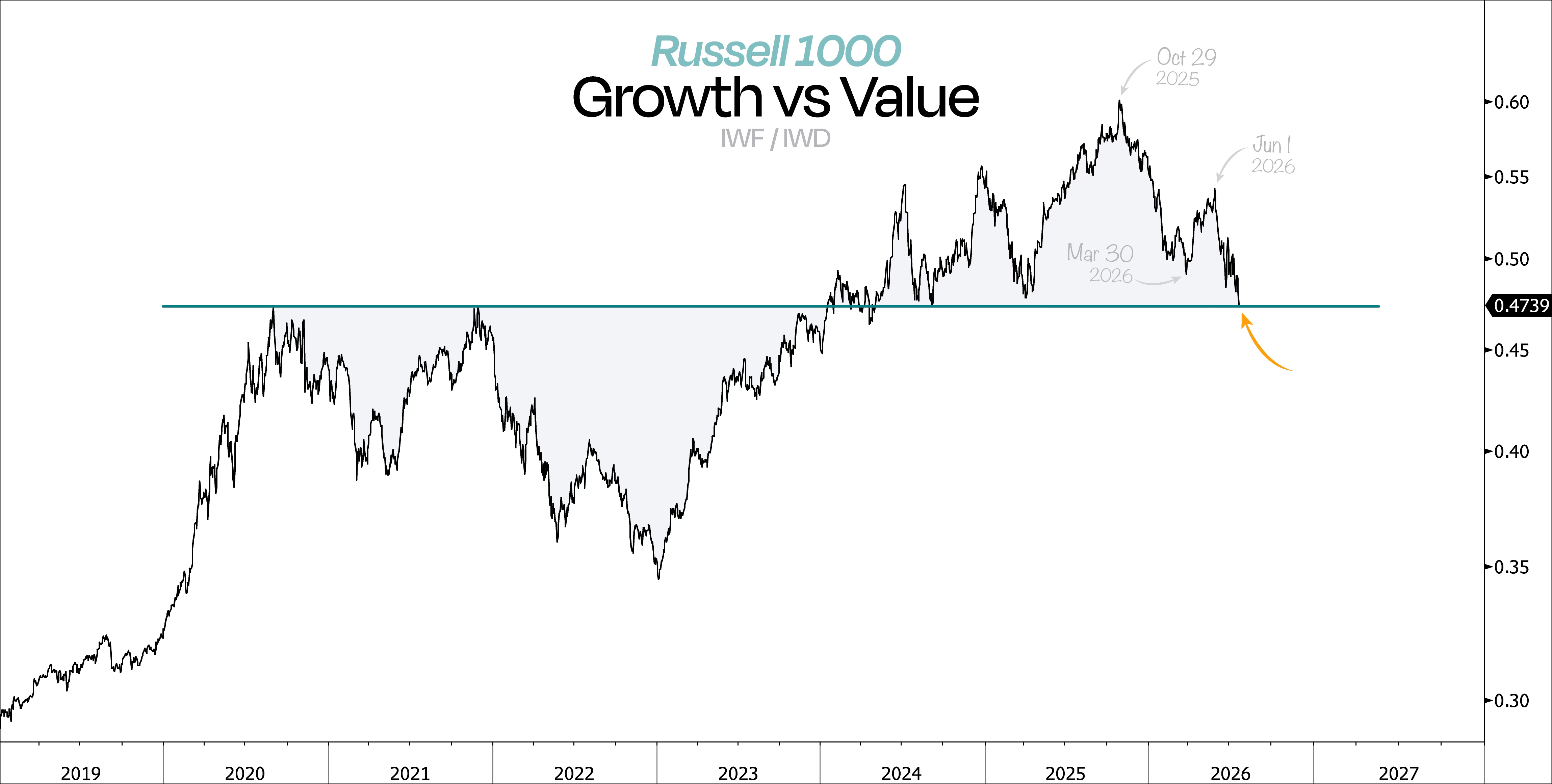
Let’s move on to our next chart, where we look at the Russell 1000 Growth Index relative to its Value counterpart. As you can see, the rotation into Value that began late last year is back in full swing after taking a breather during the Iran de-escalation in April and May.
Now, here’s the important part. Value outperforming Growth doesn’t automatically mean the S&P 500 has to struggle. In fact, the opposite can be true. For example, ever since the Growth/Value ratio peaked last October, the S&P 500 has still gone on to gain nearly 8%.
But the chart is now sitting right at a major inflection point — one that could significantly change the character of this market.
At first glance, a breakdown might look like more evidence that the broadening-out trade is alive and well. But we’d encourage you to put it into context with our first chart, where we highlighted the deterioration in risk appetite.
That’s the important distinction.
Put differently, if the broader market is becoming more risk-averse, then any further rotation out of Growth stocks would likely mean something very different. This would no longer be just money rotating within the market. Instead, it would suggest money moving toward clearly defensive areas — something that would likely put much more pressure on broader risk assets.
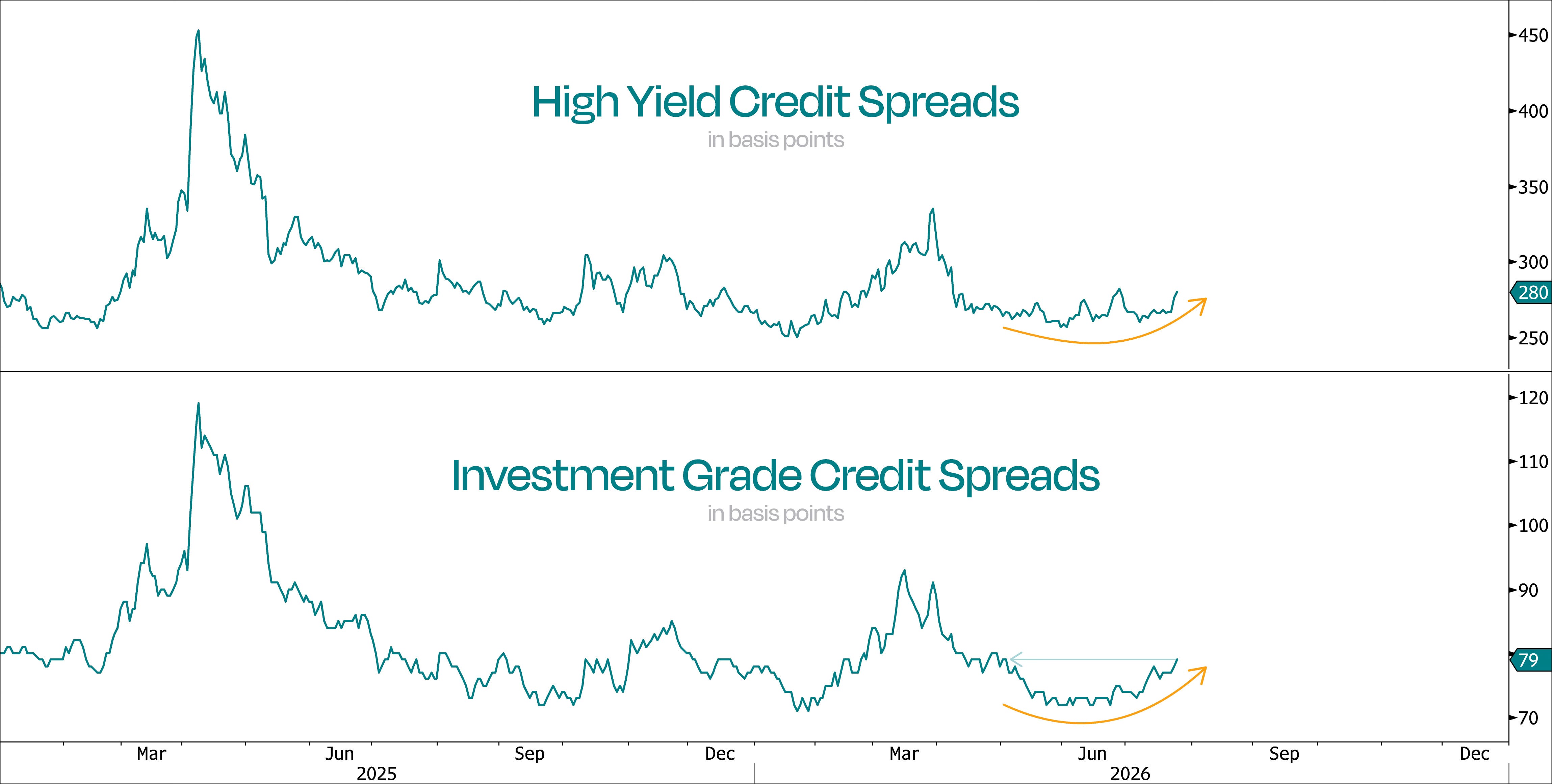
Unsurprisingly, credit spreads have already started to widen, reflecting this potential shift in market dynamics.
That said, it’s important to keep things in perspective. Both high-yield and investment-grade spreads remain in a healthy spot for now. But the direction of travel is worth watching, as it signals growing discomfort with the uncertainty surrounding the Fed and what comes next.
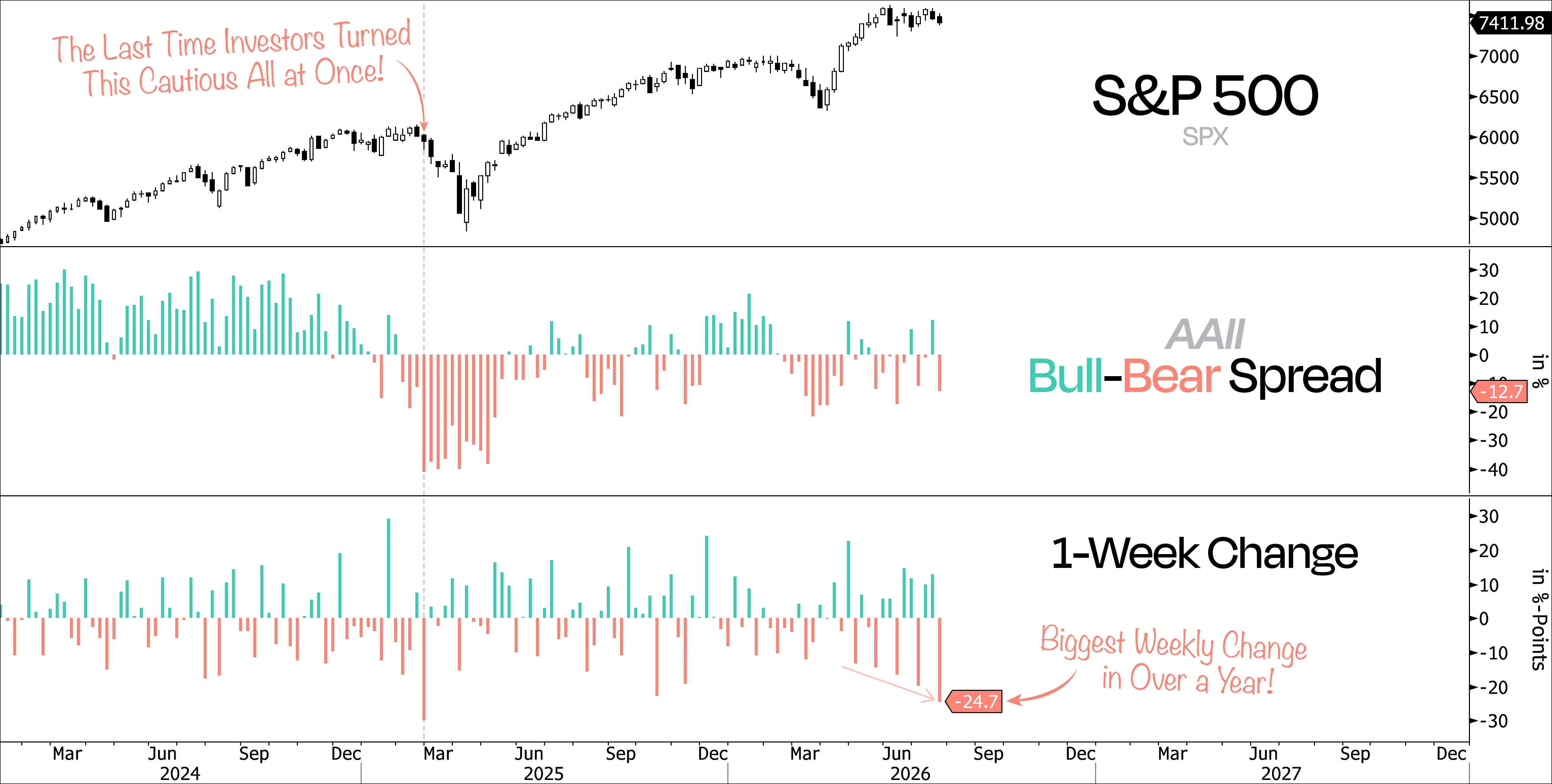
Now, this very unusual price action over the past two months has understandably sent investors on an emotional rollercoaster. As our next chart shows, the weekly change in the AAII Bull-Bear Spread has gone off the charts, with the latest swing likely reflecting the recent momentum crash and the US dollar turning into a wrecking ball for risk assets.
In fact, this marks the biggest weekly shift from Bulls to Bears since February of last year. And back then, investors were right to turn cautious early, avoiding much of the market flush that followed.
Today, many of those warning signs are starting to pile up, as we’ve just shown. And at the centre of it all sits the Fed, which has allowed the market to go on and price in an increasingly hawkish outcome.
Not long ago, we wrote that bull markets don’t die of old age. They get killed by central banks. So, if the Fed ultimately decides to hike rates and tighten financial conditions, the risk of a policy mistake becomes very real. In other words, the biggest tail risk to this bull market may no longer be just a tail risk.
That said, it’s finally time to make a big call… right?
Keep reading with a 7-day free trial
Subscribe to Duality Research to keep reading this post and get 7 days of free access to the full post archives.