

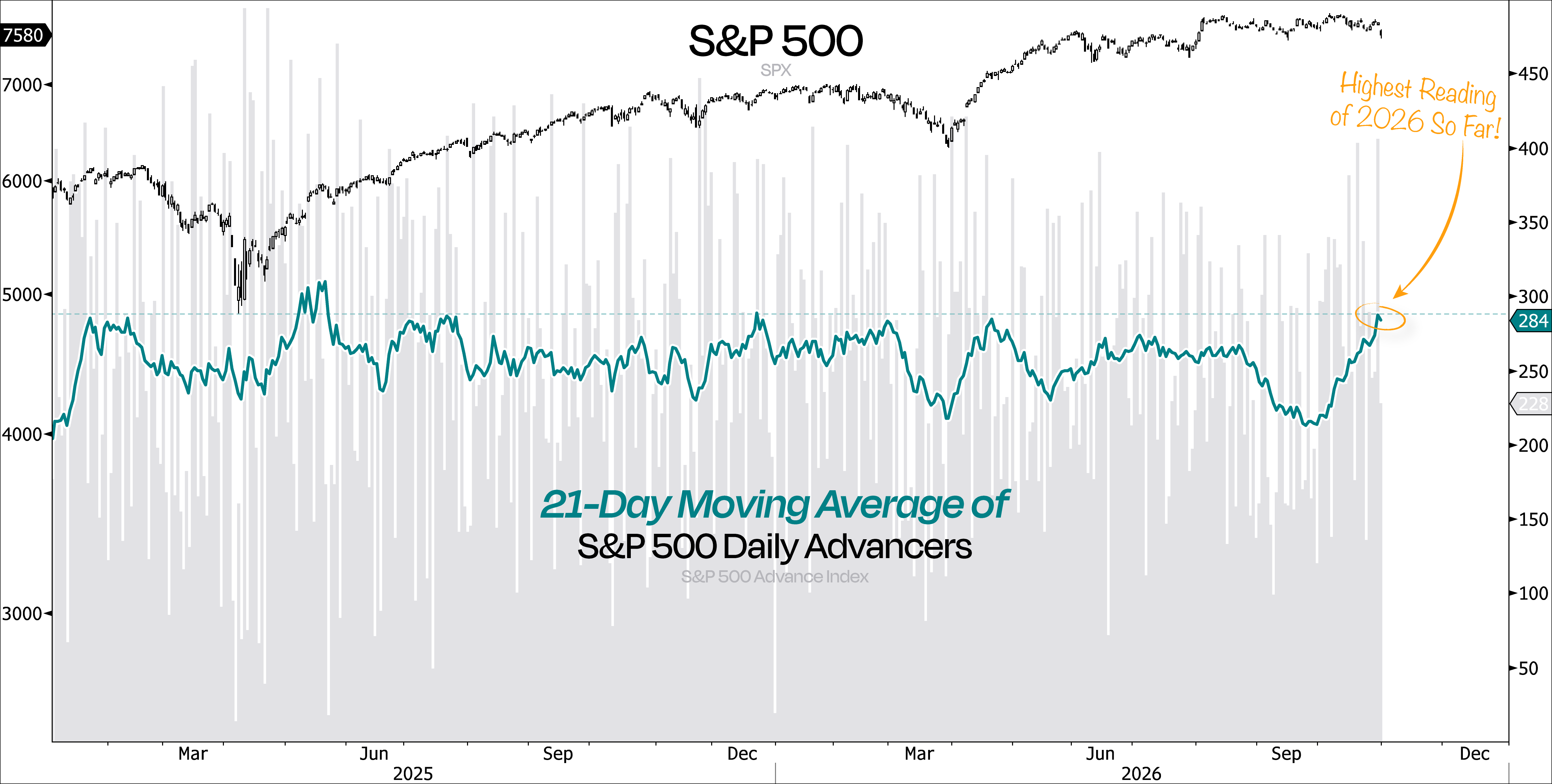
October is in the books, and with the 21-day moving average of daily S&P 500 advancers just reaching its highest level of the year right at the end of the month, we can officially call it a great month for breadth and the average stock.
Of course, you care about this because your own portfolio is roughly equally weighted across 500 names, meaning you should be up around 5% this month. Nice!
Well, jokes aside! As we’ve repeatedly said around here, be careful what you wish for! Today’s index mechanics won’t reward healthy breadth as long as Technology isn’t delivering.
Just as we said last week, things were getting pretty weird as we headed into Halloween. And with the Nasdaq 100 ending October down 6.66%, we can safely say it doesn’t get much spookier than this. We’ll leave it up to you how you want to interpret that one.
What’s clear is that this market continues to digest a mixed batch of earnings reports, which have certainly driven many of the recent Tech moves — and mostly lower — as executives continue to struggle to convince the market that all this capex is a good idea.
Their message, though, remains crystal clear: they’re not slowing down the AI buildout.
“Significant increase,” “meaningfully higher,” “accelerating,” and “aggressive investments” were all words Microsoft, Google, Meta, and Amazon used when discussing their 2027 capex plans. In other words, the companies building the capacity are still stepping on the accelerator.
At the same time, these four mega-cap heavyweights just posted negative free cash flow on a combined basis for the quarter for the first time. As recently as a year ago, they were still generating $62 billion in free cash flow.
That’s quite a shift. And it helps explain why the market is becoming increasingly fixated on the bill coming due today, while the returns on all that spending remain a question for tomorrow. That widening gap is, of course, where the opportunity lies if all these investment decisions turn out to be the right ones — although Anthropic’s S-1 has certainly added another layer of validation to the AI opportunity.
But here’s the distinction worth keeping in mind: the market can question the returns on AI spending while the suppliers continue to benefit from the spending itself.
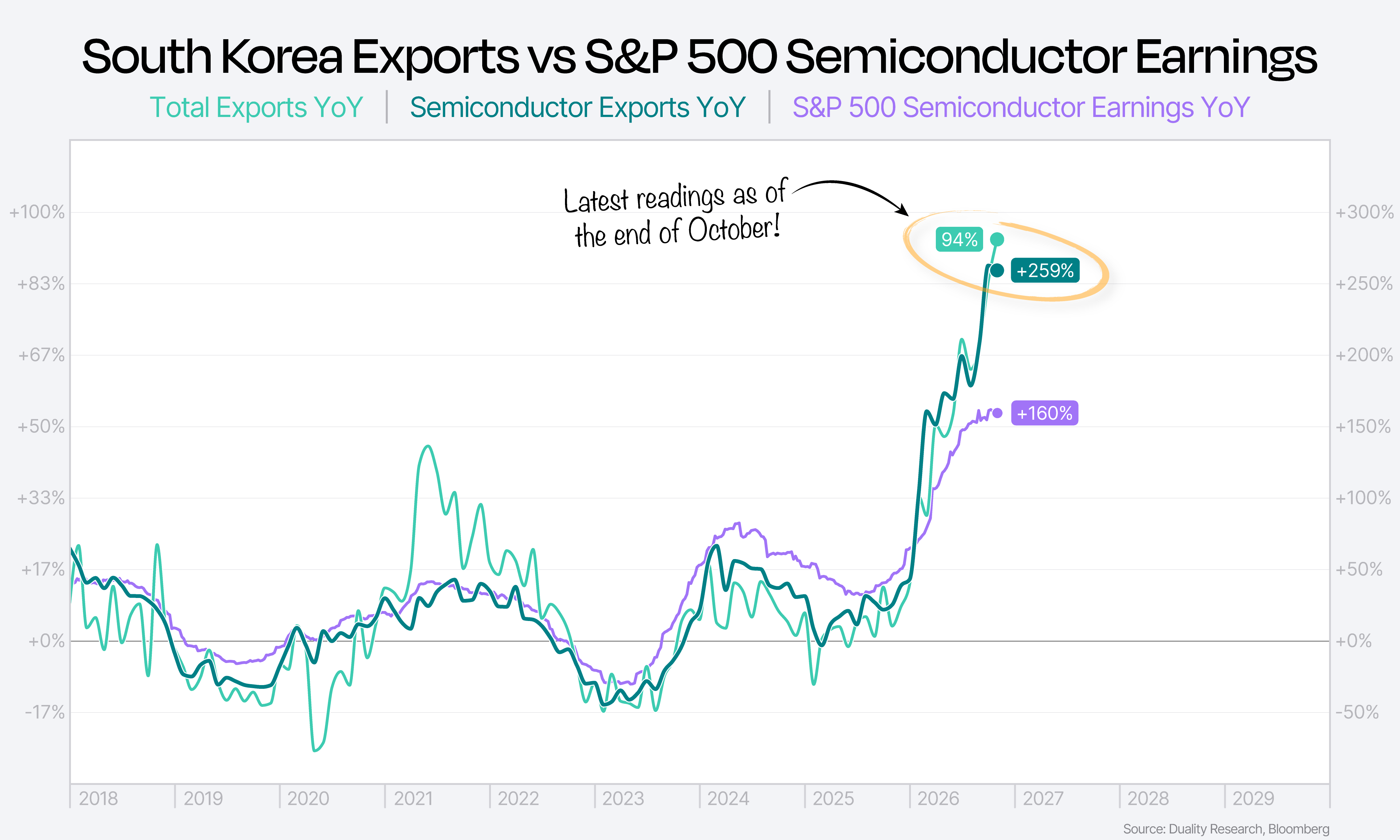
And that’s exactly what we’re seeing. As we highlighted last week, South Korea’s export figures have already been reflecting this, with the latest growth impulse catching pretty much everyone by surprise. The final export figures for October, released this weekend, are only reinforcing that message: growth is picking up again, even as the broader Tech selloff is threatening to hide what’s actually happening underneath.
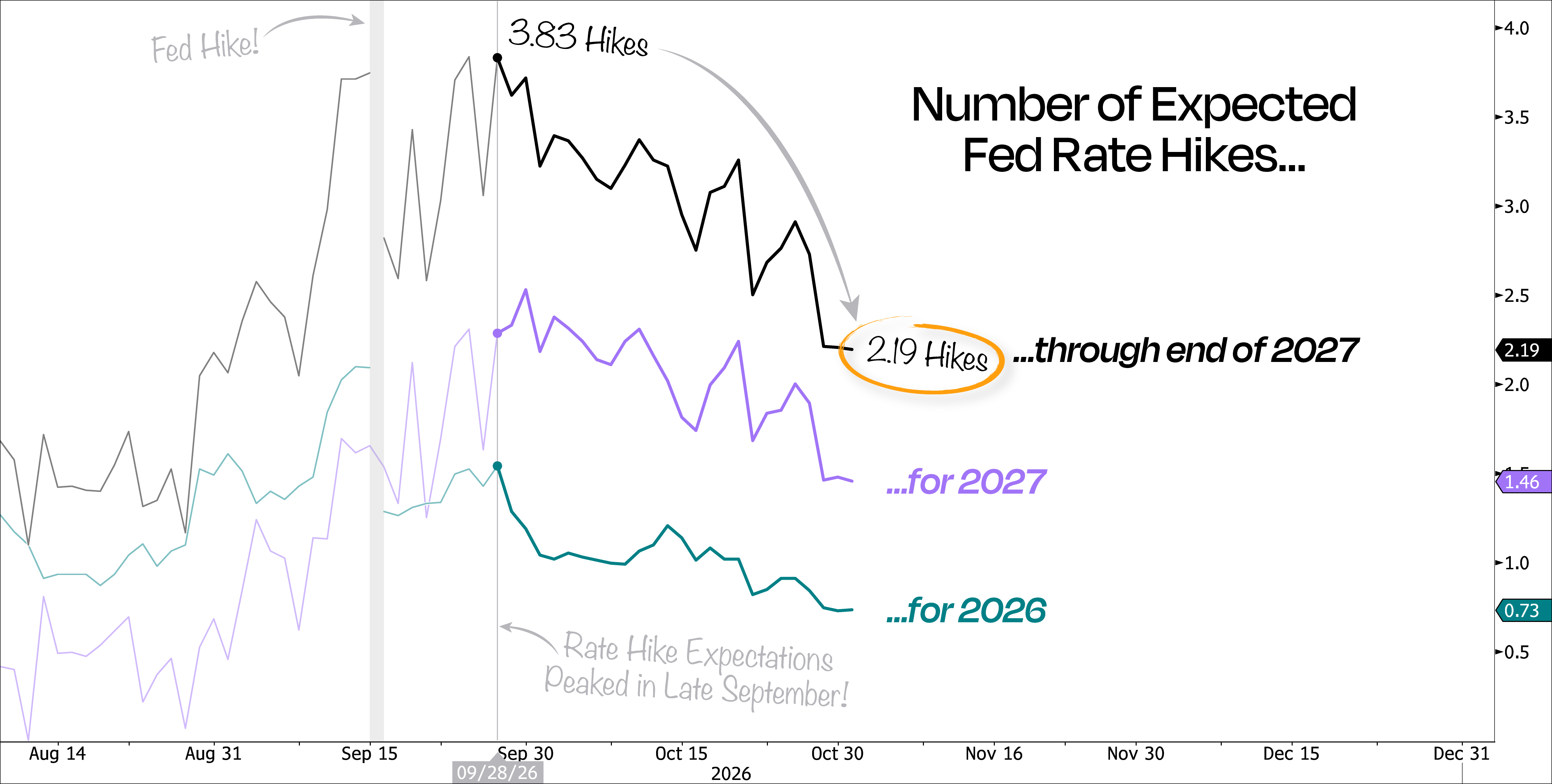
Now, one silver lining with the Tech selloff is that funding costs for all this capex have at least come down over the past month, with the US 10-year Treasury yield now back below 5%. Along with that, expectations for further Fed hikes have eased quite significantly, although whether that’s for good or bad reasons is still debatable.
Either way, at least one of the more significant headwinds for this market has eased throughout the Tech selloff, rather than adding further pressure to the downside.
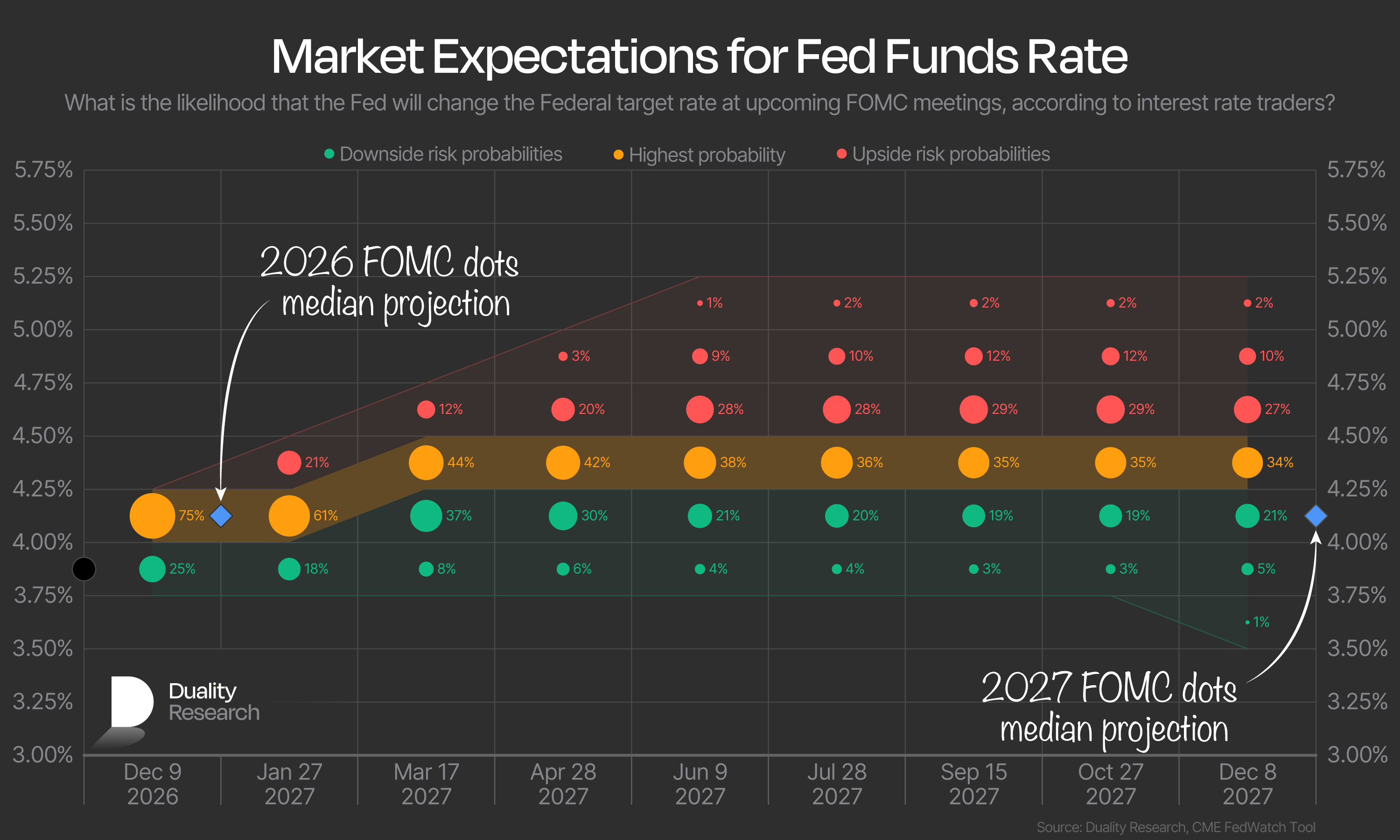
Since peaking at the end of September, when markets were pricing in close to four additional 25bp hikes through the end of 2027, expectations have come down to just 2.2 hikes. Even the remaining hike this year, as previously guided by the Fed, is no longer a done deal in the market’s eyes, with the probability of another hike by December now sitting around just 75%.
As our next chart also shows, market expectations for the Fed Funds Rate have certainly eased. Assuming we do get another hike this year, the market now sees nearly a 30% probability of no further hikes in 2027 — which, incidentally, is also what the Fed was guiding for back in September.
Now, let’s move on to the important stuff.