

During one of the most aggressive bouts of selling on record, we dismissed the breadth scare, looked past the seasonal headwinds, focused on our improving Proprietary Risk Model, and actively increased our risk exposure as the parts of the market that matter most continued to show strength.
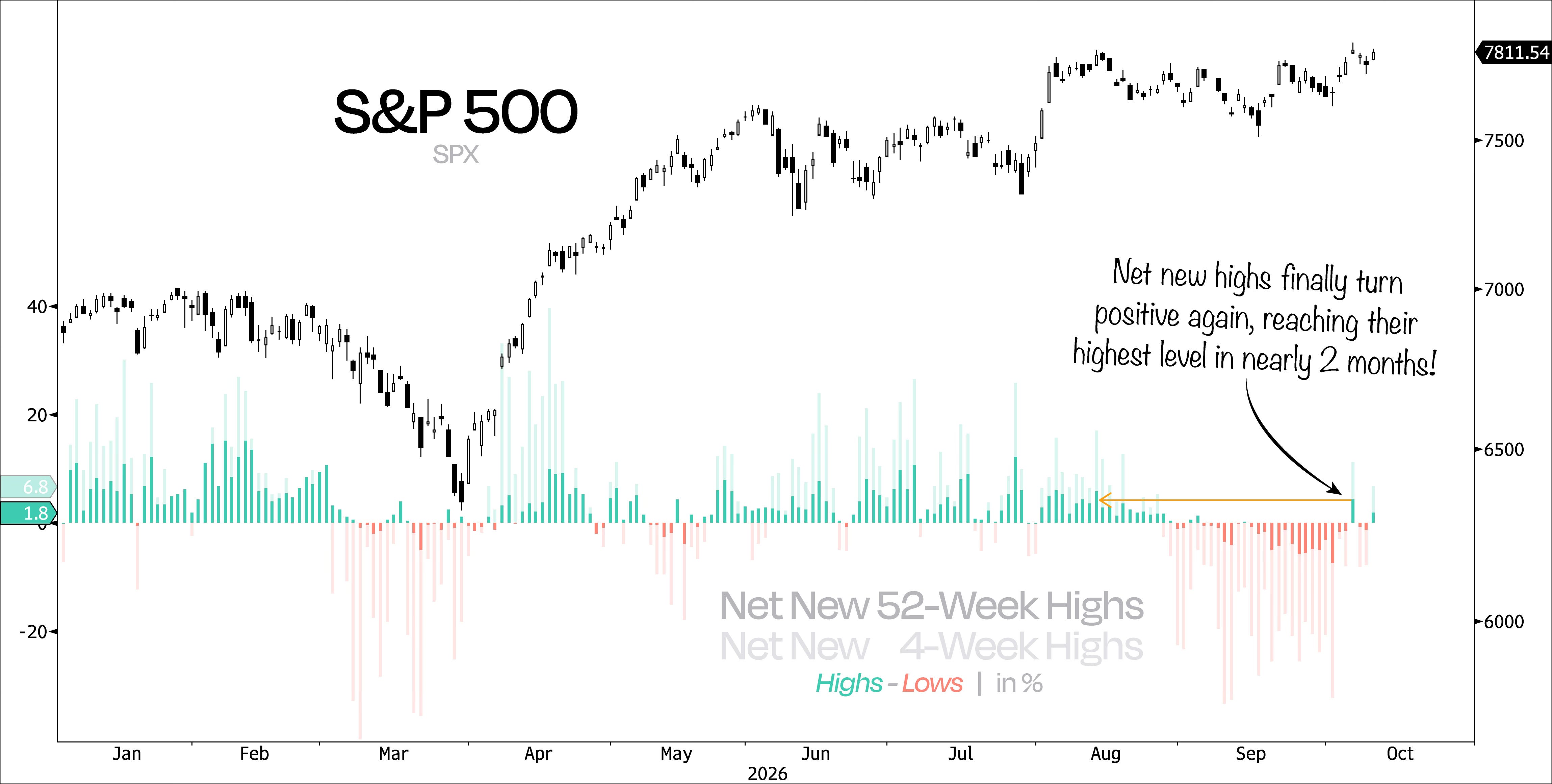
And last week, the headline numbers finally started catching up.
For the first time in weeks, the S&P 500 saw more stocks making new 52-week highs than new lows, finally bringing an end to a remarkably persistent streak of negative breadth.
Now, with the S&P 500 sitting at fresh all-time highs, there’s another development that seems to be causing plenty of confusion: the higher Treasury yields go, the higher stocks seem to follow.
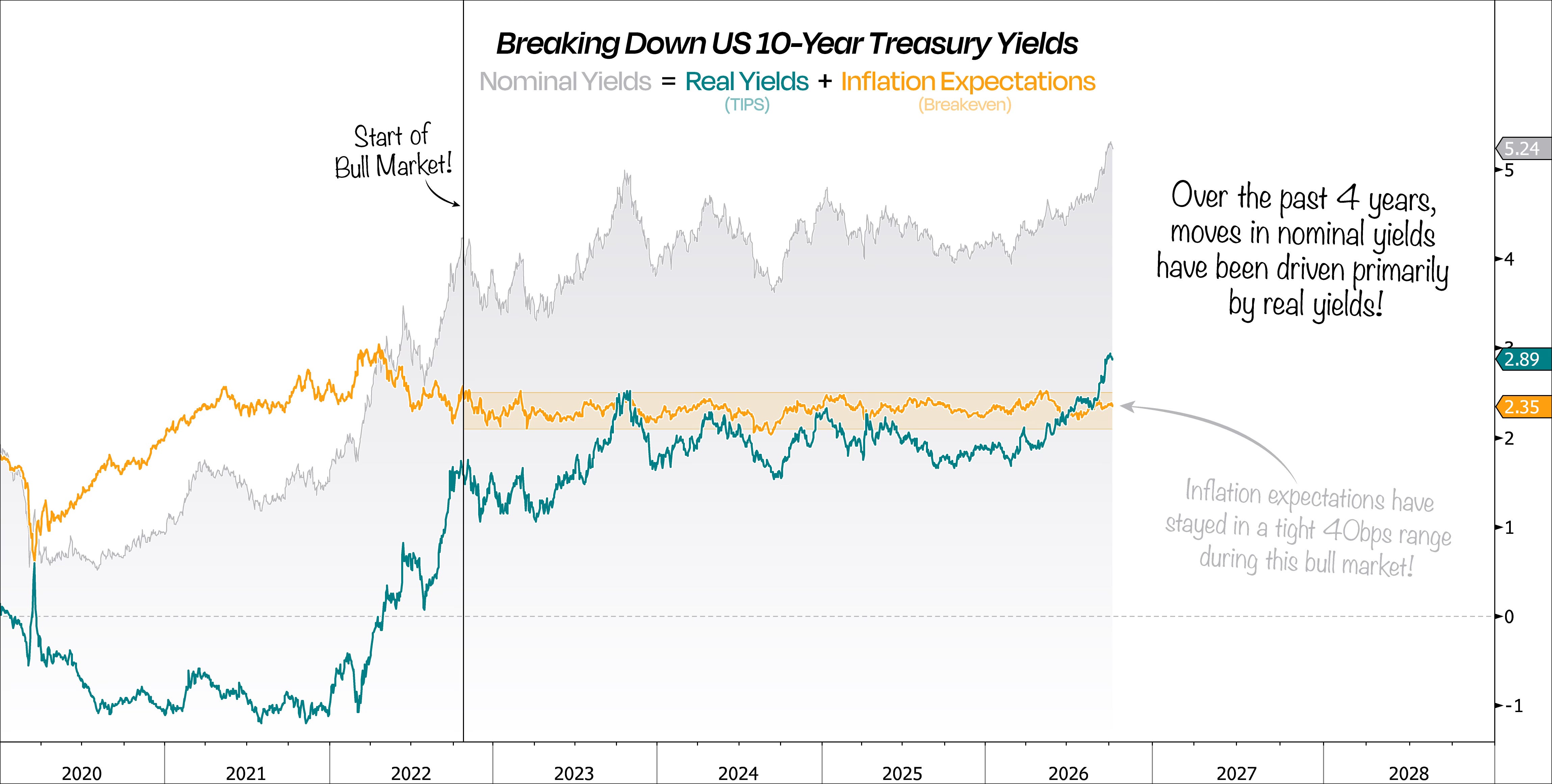
But a quick look at our next chart, where we break down the US 10-year Treasury yield, should help clear things up. As it turns out, the recent move higher in yields has been driven almost entirely by rising real yields, rather than inflation expectations, which have remained stuck in a remarkably tight range for years now.
And with nominal growth having been exceptionally strong this year, perhaps the move in Treasuries shouldn’t be all that surprising after all.
As we’ve pointed out repeatedly, stocks have already shown they can live with higher yields as long as growth and earnings remain strong enough to absorb the pressure.
Higher rates are weighing on valuations, pushing forward P/E multiples lower. But so far, earnings growth has more than made up for that contraction, allowing stocks to keep marching higher even as investors pay less for each dollar of forward earnings.
Of course, that doesn’t mean higher yields aren’t hurting anyone. Quite the opposite. The parts of the market that aren’t delivering meaningful earnings growth are feeling the pressure much more directly.
So it goes without saying: the higher yields go, the more important it becomes what Corporate America delivers and has to say about the economy.
That’s precisely what makes the earnings season kicking off this week so important. After all, earnings strength has provided the greatest insulation against growing macro risks.
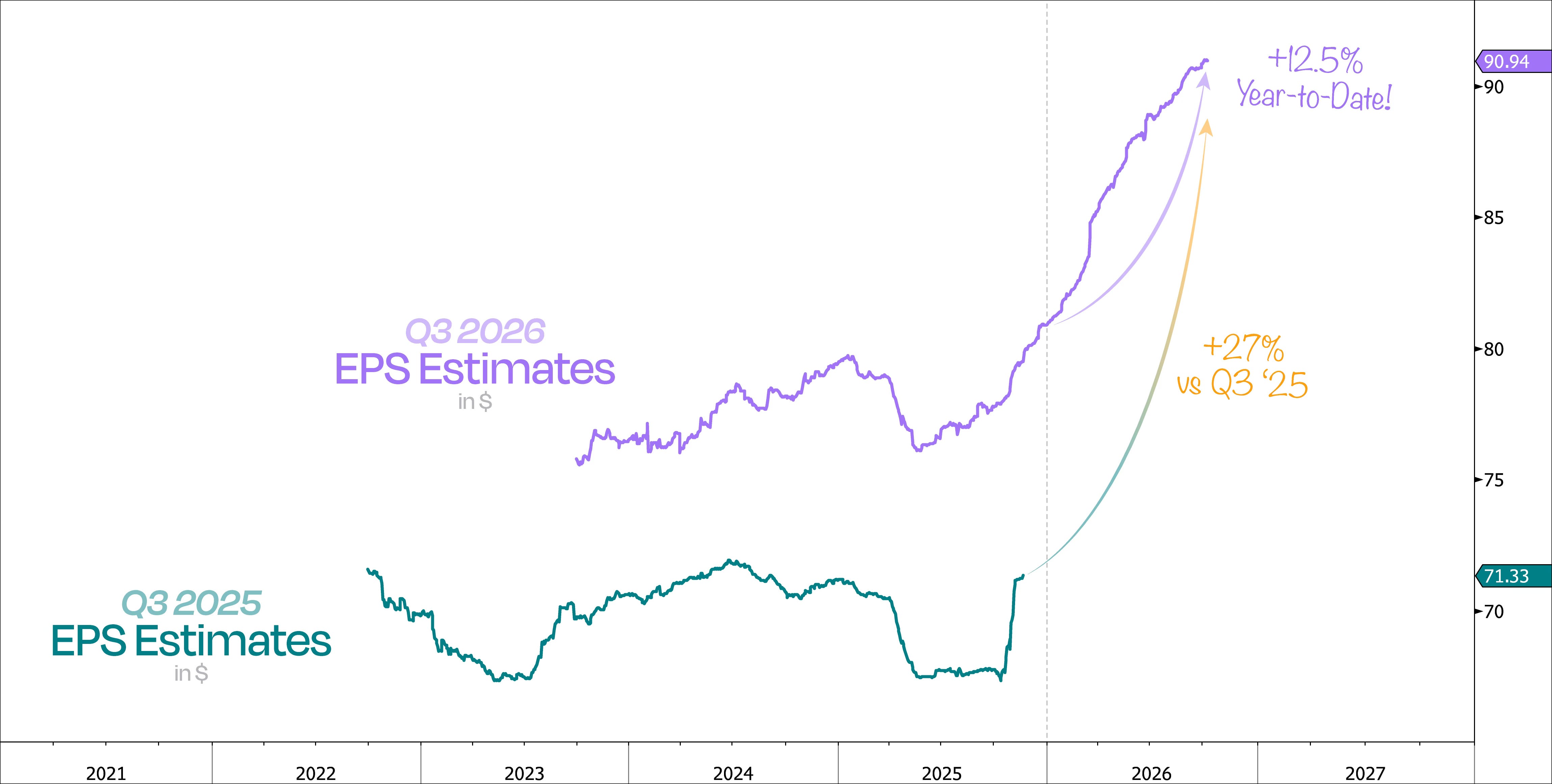
Treasury yields are now roughly 70 basis points higher than they were last earnings season, putting even more pressure on companies to deliver the earnings growth needed to offset the drag on valuations. The only thing keeping us slightly worried is that expectations are already running exceptionally high. Q3 earnings estimates have climbed a remarkable 12.5% this year alone, putting the bar at a whopping 27% year-over-year earnings growth.
In other words, strong earnings aren’t just a nice bonus anymore. They’re increasingly becoming a necessity.
But let’s also not forget that Corporate America has repeatedly managed to impressively beat even these lofty earnings expectations in recent quarters.
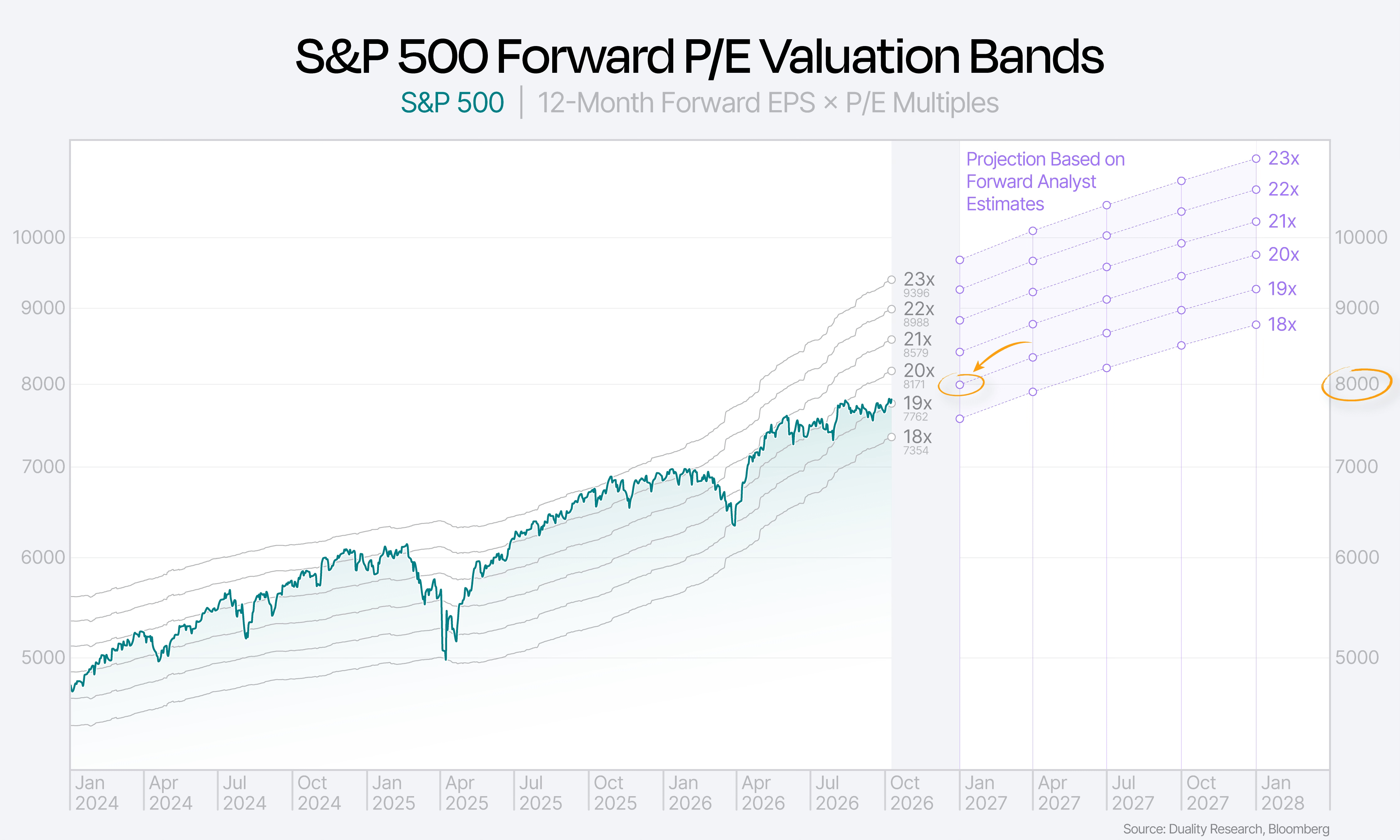
And as we pointed out previously, even if earnings come in roughly in line with expectations, the S&P 500 no longer requires anything other than stable multiples to reach 8,000 by year-end.
At roughly 19x forward earnings, there’s no need for a re-rating, multiple expansion, or any valuation tailwind. Earnings growth alone can get us there.
So, the natural question to ask is: if we remain confident in the earnings growth picture, what could push forward P/E multiples lower from here and ultimately put an S&P 500 year-end close above 8,000 further out of reach?
Well, barring any major macro or geopolitical shocks, one obvious candidate would be…